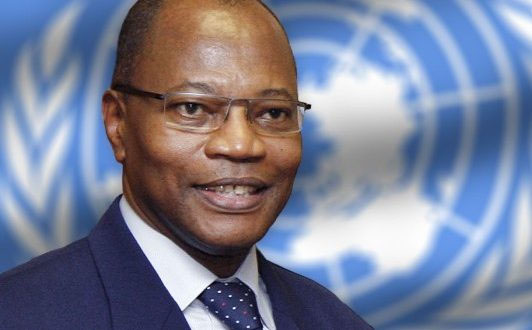
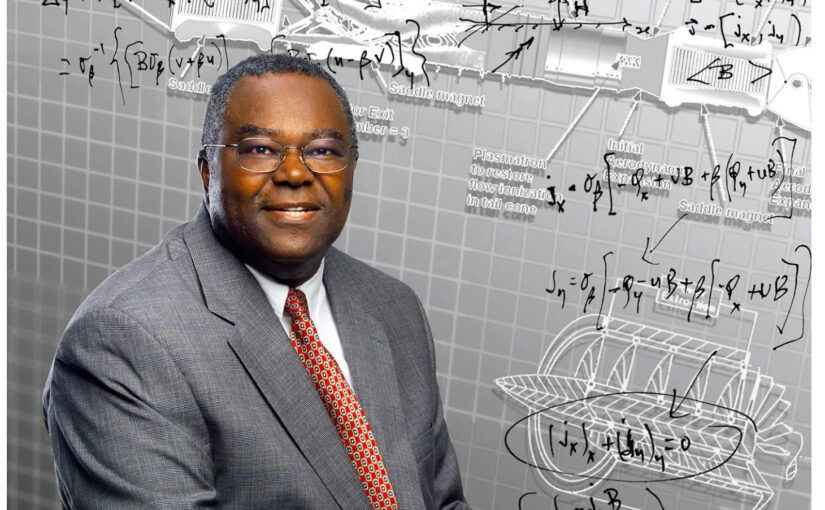
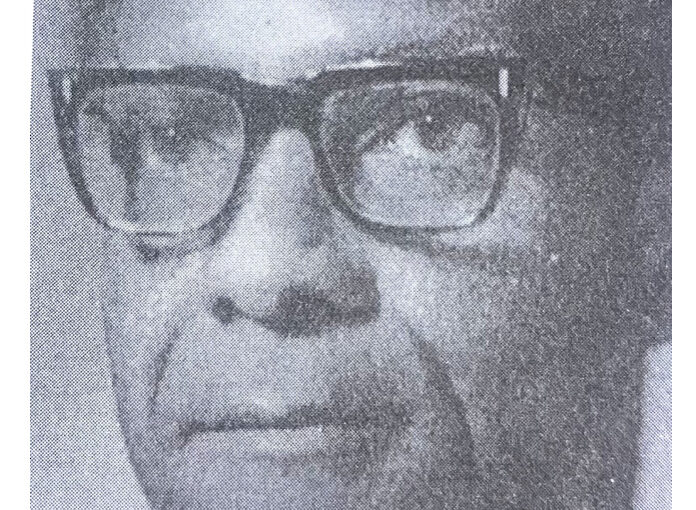
Isaiah Miguel Blankson – the Aeronautical and Aerospace Engineer

When an aircraft travels above the speed of sound, it creates shockwaves. As these shockwaves sweep across the ground, they cause a sudden change in air pressure that we hear as a sonic boom. Because of its effects on hearing and terrestrial structures, scientists and engineers have sought to develop supersonic and hypersonic vehicles that produce milder, or no, sonic booms. 

Rather than act on the shape, a very astute researcher and engineer took inspiration from emperor penguins and suggested another solution. While studying drag reduction at MIT in 1968, he was struck by how smoothly and effortlessly penguins move through water. He realized that when one dives into the water, thousands of small air bubbles trapped in its feathers are released. These bubbles create a cushion between their skin and the water, reducing the friction drag as water flows over their body.

Forty-seven years later, he suggested something similar for supersonic and hypersonic vehicles while working for NASA, using a laser to create a layer of ionized gas around these vehicles to disrupt the shockwaves and reduce the sonic boom. In 2015, he patented the idea.

This engineer, who had the amazing ability to find solutions to aerospace problems everywhere, even in nature (biomimicry), and was a brilliant, curious lateral thinker, is an Mfantsipim Old Boy called Isaiah Miguel Blankson.

In its 150 years of existence, Mfantsipim School has seen many brilliant students come through, and this MOBA may well be one of the most astute minds to have climbed the Hill. It has truly been an honor to research his achievements.

Hailing from Cape Coast, Dr. Isaiah Blankson entered the school in 1957 and graduated in 1964. His A-Level scores that year were the highest in West Africa, with 3 “A”s in Pure Math, Applied Math, and Physics. 

With those impressive scores, he was sponsored by the African Scholarship Program of American Universities, a program of the U.S. Information Agency, to study at the Massachusetts Institute of Technology (M.I.T.). 

He received his B.S. degree in 1969, and that year he won the prestigious Luis de Florez Award for engineering excellence. It is MIT’s internal prize for the most inventive undergraduate or graduate engineering student, and Isaiah winning it after his first degree showed his brilliance.

He stayed at MIT and completed his M.S. degree in 1970 and his Ph.D. degree in 1973, both in aeronautics and astronautics, becoming the first African to receive a doctorate in Aeronautics & Astronautics.

His thesis, which was later published as a paper in a 1975 edition of the journal of the American Institute of Aeronautics and Astronautics (AIAA), was titled “The Measurements in the Laminar Near-Wake of Magnetically Suspended Cones at Freestream Mach Number = 6.3”. It was co-authored with his MIT supervisor, Morton Finsto.

His thesis focused on wind-tunnel experiments, and he demonstrated how models could be magnetically suspended rather than using attached supports. He ionized the air in the wind tunnel, turning it into cold plasma. This allowed him to use electromagnets to suspend the cone without support, making the wake measurements in hypersonic wind tunnel testing much more accurate. He was already showing his ability to use electromagnetism to solve aerospace problems.

Now, the “plasma” he worked with for his thesis and throughout his career has often been described as the fourth state of matter. It is created when a gas is energized enough, like in a welder’s arc, a fluorescent tube, or the Sun. The energy strips electrons from atoms, creating an extremely hot mix of electrons and positively charged ions. Because it contains free electric charges, it begins to conduct electricity and respond to magnetic fields. However, because it is so extremely hot (a welder’s arc can reach 6000 deg F or 3300 deg C), scientists work with a type called a non-equilibrium, or cold, plasma. In this type, the method used to create it strips electrons from the ions while the bulk of the ions remains cold. This makes the plasma easier to work with. This is the type of plasma Dr. Blankson used for his thesis and throughout his career.

After leaving MIT in 1973, his successive careers, first at Xerox, then General Electric, and finally at NASA, were marked by research and development. From his R&D efforts flowed papers, patents, and inventions. In most of these jobs, his ability to think laterally and his mastery of magnetohydrodynamics (MHD) and plasma aerodynamics (the use of electromagnetism and plasma to manipulate gas and fluid flows) are evident.

He first worked for Xerox Corporation at their Webster Research Lab in Webster, New York, from 1973 to 1982. There, he studied electrohydro and gas dynamics.

From 1982 to 1988, he worked at General Electric’s Corporate Research Center in Schenectady, New York. During this period, he worked on hypervelocity plasma-armature projectile launchers and gas-dynamic circuit breakers. He invented plasma armature launchers that used electromagnetic forces to accelerate plasma and projectiles to hypervelocity, while his gas-dynamic circuit breakers used controlled gas flow to extinguish plasma arcs that formed within them. He also researched the gas dynamics of high-temperature powder coating operations for halogen lamps.

Isaiah left GE for NASA in 1988 and would work there until his death in 2021. 

He was initially named as the Generic Hypersonics Program Director at NASA Headquarters in Washington, D.C. In 1991, he became the Deputy Director of the Hypersonics Division, a position he held until 1997.

His task was managing the agency’s new long-range program to develop air-breathing hypersonic vehicles. This was a time when NASA considered developing vehicles other than rockets for spaceflight, and the government was also interested in hypersonic missiles. 

These vehicles were designed to use engines that allow air to flow into the combustion chamber at supersonic speeds. The incoming air acts as the compressor. It is rammed into a tube without moving blades, where it combines with fuel. This engine was called a Supersonic Combustion Ramjet, or a scramjet. Because it allowed air into the combustion chamber, it was termed “airbreathing.” This contrasts with more common jet engines, which use a compressor to actively draw in air.

Isaiah’s efforts included organization, research, and the publication of several papers on airbreathing propulsion, waverider designs, and computational fluid dynamics modeling. These efforts helped initiate NASA’s Hyper-X program in 1996. The program built and tested three X-43A scramjets, two of which reached Mach 6.83 and Mach 10 in 2004. From this project arose the U.S. Air Force’s X-51 – an unmanned research scramjet experimental aircraft designed for hypersonic flight at Mach 5 and an altitude of 70,000 feet.

In 1997, he moved to NASA’s Glenn Research Center in Cleveland, OH, where he was one of only 12 Senior Technologists among more than 1,250 scientists. He remained at Glenn until his passing. There, he continued his research in airbreathing hypersonic aerodynamics and propulsion, plasmas and electromagnetic interactions in gas dynamics, magnetic levitation, advanced millimeter-wave imaging technologies for aviation safety and homeland security, and water purification.

His work in those years led to inventions and patents. His first two patents dealt with engines to power hypersonic jets. The X-43A produced by the Hyper-X program lacked its own engine and was mounted to a Pegasus rocket booster launched from a B-52 bomber. 

His first patent was issued in 2002 for a radical redesign of the jet engine called the Exoskeletal Gas Turbine Engine. Instead of a turbine spinning on an internal shaft, his engine used a rotating drum within which the blades extend inward rather than outward. This lowered the weight and increased the efficiency of the jet engine.

In 2004, he got the patent for his signature invention – the Magneto-Hydrodynamic Power (MHD) – controlled Gas Turbine Engine. The concept involved ionizing the incoming air just enough to make it electrically conductive, then slowing it down from hypersonic speed. The loss of speed made the air more controllable. In the process, it also lost kinetic energy, which could be extracted and recycled into the system to boost overall engine performance. It was estimated that the engine could power speeds up to Mach 7.

His third patent, obtained in 2015, addressed the sonic boom caused by shockwaves during supersonic and hypersonic flight. He detailed his methodology in a paper he presented in 2003 titled “Mitigation of the Sonic Boom by Pulsed Forward Plasma Energy Deposition: An Active Suppression Method,” and it was discussed in the first paragraph.

A 2018 patent for a Water Purification System also demonstrated his knack for lateral thinking – he applied his research on electromagnetism and plasma to water purification. In the invention, he infused water with cold plasma. Since these gas particles were charged, they could kill organisms in the water, thereby purifying it. Besides terrestrial use, he saw that as a way for astronauts to purify water on space flights.

Besides these patents, he also worked on a Millimeter Wave Radiation camera that allowed seeing through  pitch-black darkness, heavy fog, dust clouds, and severe weather. It also allowed the detection of hidden weapons. The invention was deployed to enhance aviation safety during low-visibility runway landings and detect weapons during conflicts. Moreover, he continued work on magnetic levitation for testing, as in his thesis work, and space launches.

His efforts did not end in the lab – he also tried to prepare the next generation of scientists and engineers, and in that, he also mentored minority students. He helped establish research programs at Hampton and Johnson C. Smith Universities, both HBCUs with strong research reputations. Under the NASA Universities Centers of Excellence Program in Hypersonics, he served as the technical monitor/management consultant for the University of Maryland, the University of Texas at Arlington, Syracuse University, and North Carolina A&T State. He also chaired the advisory visiting committee for Penn State University’s Dept of Aerospace Engineering and for the North Carolina A&T, NASA Center for Research Excellence. In 2005, he was invited by the University of Science and Technology in Ghana to help establish a Department of Aeronautics.

He also worked with the Faculty of Physics at Moscow State University on millimeter-wave imaging research and, as a result, developed a working knowledge of Russian.

Dr. Blankson, through his prolific research, authored and co-authored over 100 papers, garnering 995 citations.

It is no surprise that he was honored and awarded for his work. 

In 1969, he won the Luis de Florez Award for Excellence in Engineering at MIT after completing his undergraduate degree.

While at NASA, he won several awards:

– the NASA Exceptional Performance Award in 1990, 

 – the NASA Glenn Research Center’s Technical Achievement Award in 1999, 

 – the NASA Medal for Exceptional Service for outstanding contributions to the development of technologies for high-speed flight in 2002, 

 – the NASA Glenn Martin Luther King Recognition Award in 2004,

 – the Presidential Rank Award — Meritorious Senior Professional in 2006, 

 – the Presidential Rank Award — Distinguished Senior Professional in 2014, and 

 – the NASA Exceptional Technology Achievement Medal in recognition of his development of non-equilibrium plasma technology for aerospace and terrestrial applications in 2018.

He was also honored often by the African-American community:

 – the Black Engineer of the Year Award in 2005,

 – the Science Trailblazer Award, Emerald Honors in 2005, and 

 – the National Emerald Honors Black Scientist of the Year Award in 2006.

In its September/October 2005 issue, “Science Spectrum”, a magazine focused on minority scientists and engineers, had Dr. Blankson on its cover and gave him the nickname “Speed Demon” for his work on cruise missiles and aircraft concepts designed to travel four to eight times the speed of sound.

Interestingly, at NASA, he was also known as ‘Dr. Speed”.

In 2019, Dr. Blankson was selected as an American Institute of Aeronautics and Astronautics Fellow and served as a reviewer for its journal. 

From 1998 until his death, he served as the US National Delegate to the NATO Research and Technology Organization’s Working Group on Hypersonic Vehicle Technology.

He was a Member of the Fluid Dynamics panel of the National Academies Review Panel for the Air Force Office of Scientific Research in Hypersonics and Unsteady Flows.

He was also a member of the Advisory Board of the NASA Glenn Research Center.

Dr. Blankson’s life and career epitomize brilliance, hard work, ingenuity, and curiosity. Colleagues at NASA described his curiosity as “legendary” and praised his wisdom, intellect, and generosity in sharing ideas. Raised on the Kwabotwe Hill, these qualities are not surprising. The heights that he took them to are breathtaking. He will forever be a symbol of what the upbringing on the Hill can produce, and every Mfantsipim boy is proud of his contributions to airbreathing hypersonic aerodynamics and propulsion, plasmas and electromagnetic interactions in gas dynamics, magnetic levitation, advanced millimeter-wave imaging technologies for aviation safety and homeland security, and water purification. He passed away on November 19, 2021, at the age of 77, leaving a legacy that will outlive him.

Dr. Isaiah Miguel Blankson is an illustrious Son of Mfantsipim, a Botwe Boy.
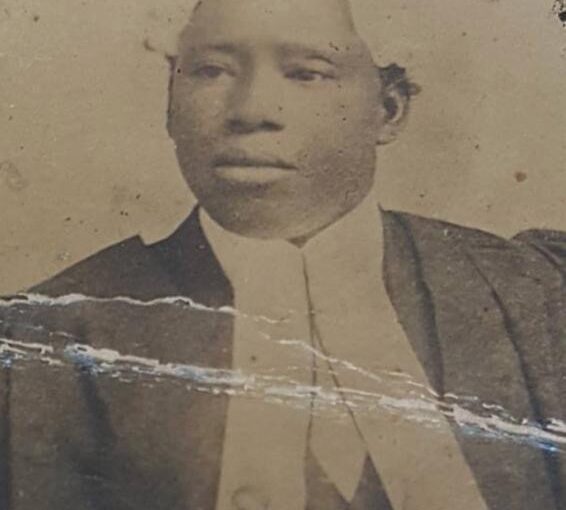
William Edward Sam – an Unsung Founding Member and Hero of Mfantsipim

Of all the unsung heroes and unknown founders of Mfantsipim School, W.E. Sam may be one of the most impressive.
The type of person he was is probably shown by his funeral on July 18, 1906, in Cape Coast. The Gold Coast Leader reports that his burial at Fahudzi Cemetery was a large, imposing event attended by many and escorted by police under the supervision of Superintendent Webb.

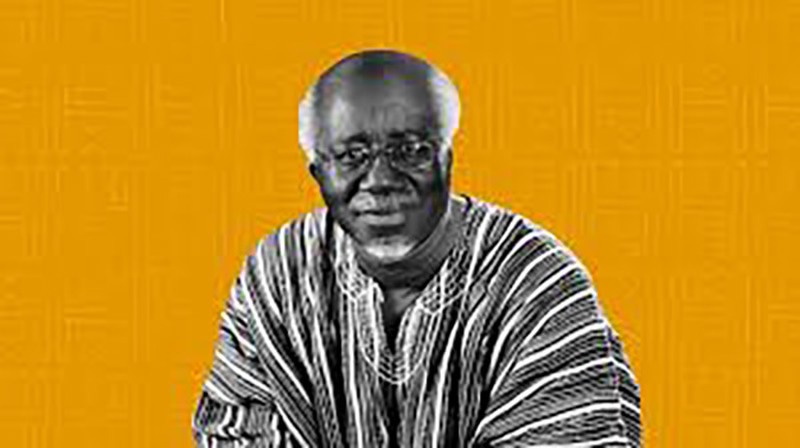
William Edward Sam came from an Akyem family but ended up a Cape Coast man. He was born on March 9, 1833. He became an early convert to the Christian faith and served for some years as a teacher in the 1840s under Rev. Thomas Birch Freeman, the Father of Ghana Methodism and the “Freeman” in “Freeman-Aggrey”. He taught at a school Birch Freeman opened in Beulah, a settlement he established 8 miles from Cape Coast.
By the 1860s, Sam had quit teaching and was working as an agent for a number of African and European merchants on the Gold Coast, including F&A Swanzy (which would eventually become Unilever).
Besides being a great businessman, he was also an excellent negotiator and mediator. Hence, the British hired him to be a mediator between them, the Dutch, and the coastal chiefs. He also fought alongside the British against the Asantes, as most Fantes at that time did.
After the 6th Asante War, he was made chief magistrate and commandant for the fort at Axim. From this position, he made many trips into the gold-bearing areas around the Ankobra. He struck up relationships with the Wassa chiefs that would prove very significant for his career down the line.

All this time, he kept working for F&A Swanzy. In 1878, he accompanied a partner of the firm named Crocker on a gold-prospecting mission through the Wassa areas. He secured what became known as the Wassa (Gold Coast) Mine at Adja Bippo.
He had two sons – William Edward Sam Jr. and Thomas Birch Freeman Sam (T.B.F.). They both went to England after their secondary education to train as mining engineers at the Crystal Palace School of Practical Engineering. They joined their dad in the mining operations for F&A Swanzy, but also opened and operated several mines privately. In 1899, Sam lost his son, William Edward Jr., in a mining accident, and for the rest of his life, he worked closely with T.B.F. in the mining business. The latter would become the dominant mining engineer in the Wassa areas for years and published on the ore types in the area and on gold mining.
Sam would come to be known as “Tarkwa Sam” and the “Mining King of West Africa”.

Like most wealthy business people in Cape Coast at the time, he was politically and socially active. He was an active member of the Aborigines Rights Protection Society and became its president in 1902. Never having forgotten his beginnings as a pupil teacher, he became a great advocate for education in the Gold Coast, a philanthropist, and a very generous benefactor of Mfantsipim School.

When Rev. Kemp closed the school in January 1889, Sam was one of the men who contributed money towards its reopening.
After the Fante Nationalists finished fighting the Lands Bill of 1897, Mensah Sarbah turned his attention to education for the Fantes. With Sam’s support, he managed to convince chiefs in the gold-mining areas to donate 10% of the annual concessions they received from miners to a fund named the “Mfantse National Educational Fund” in 1902. Two of the trustees of the fund were Sam and J.E.Casely-Hayford, and T.F.E Jones was the secretary and treasurer. The plan was to open schools and offer scholarships in the former Fante Confederacy. The fund opened primary schools at Prestea and Himan.
Realizing that remittances from the chiefs would not be enough to establish enough schools, Mensah Sarbah and Sam decided to raise money through public subscription. They decided to form a publicly traded company that would sell shares to raise money. Since every new company in the Gold Coast had to be registered in London (Mensah Sarbah later got that law changed), Sam and Mensah Sarbah found themselves heading to London on the “SS Tarkwa” in November of 1903. It was on this trip that the two men hatched the idea of founding a secondary school with proceeds from the public offering to the company they were about to open – a company they planned on naming “the Fante Public School Ltd”. “The object of the Company was to establish, conduct, and maintain in the Gold Coast and other parts of Africa any Schools, colleges, universities, educational academies, institutes, seminaries, polytechnics, educational and other training institutions…” (GCL, March 12, 1904).
The company hoped to raise £7500 by selling 15,000 shares at 10 shillings per share (note: 20 shillings make £1).

On their return, they sold the idea to the other Fante nationalists of the ARPS, who bought into it. The directors of the new company were W.E. Sam, J.E. Biney, and Chief R.A. Harrison. J.P. Brown was an ex officio member, Mensah Sarbah the solicitor, and D.M. Abadoo the secretary.
On April 5 1905, the Fante Public Schools Ltd opened its first secondary school named “Mfantsipim”. Their first location at Coussey’s House, a location donated by W.E.Sam. He also donated the room where the company’s Board met.

W.E Sam, besides being one of the two originators of the idea of forming the Fanti Public Schools Ltd to open Mfantsipim School, also became one of the school’s biggest financial backers (Adu Boahen, 1996). He, together with Biney and Harrison, acquired a total of 2300 shares in addition to what they already had, to allow the opening of Mfantsipim. So the true total amount of money Sam contributed to the school’s founding is significant and not fully appreciated. He continued to support the school after it opened and even after its amalgamation with the Collegiate School.
Moreover, in his will, Sam bequeathed £700 to the Mfantsi National Education Fund. This money was used, after his death, to establish a scholarship fund for six boys at Mfantsipim School, which ran for a few years in the early 1900s.

And yet Mfantsipim has not honored this amazing philanthropist and founder in any lasting way, shape, or form. His name is on no buildings, and nothing is named after him. Like a piece in the Gold Coast Leader of August 4, 1906, stated:
“If ever any should be ‘monumented’, Sam should be, but we have no public building in which to place his effigy to be gazed upon by sojourners to come. We have no squares in which either in bronze or stone to erect a statue, an obelisk, or a fountain to commemorate his name and so recall his good works, let us then rename one of our Towns or found a new town and name it ‘Sam-ville’.”

William Edward Sam is a true founder and hero of Mfantsipim School.

References:
– Bartels: History of Ghanaian Methodism, 1965
– Adu Boahen: Mfantsipim and the Making of Ghana, 1996
– Hutchinson: Pen-Pictures of Modern African Celebrities, 1929
– Gold Coast Leader of August 4, 1906
– Gold Coast Leader of July 21, 1906
– Dumett: El Dorado in West Africa, 1998
– Kimble: A political history of Ghana: the rise of Gold Coast nationalism, 1850–1928, 1963

The Man Who Honored Rev. A.T.R. Bartrop

(A Piece by Daniel Adu Gyamfi and Nana Dadzie Ghansah)

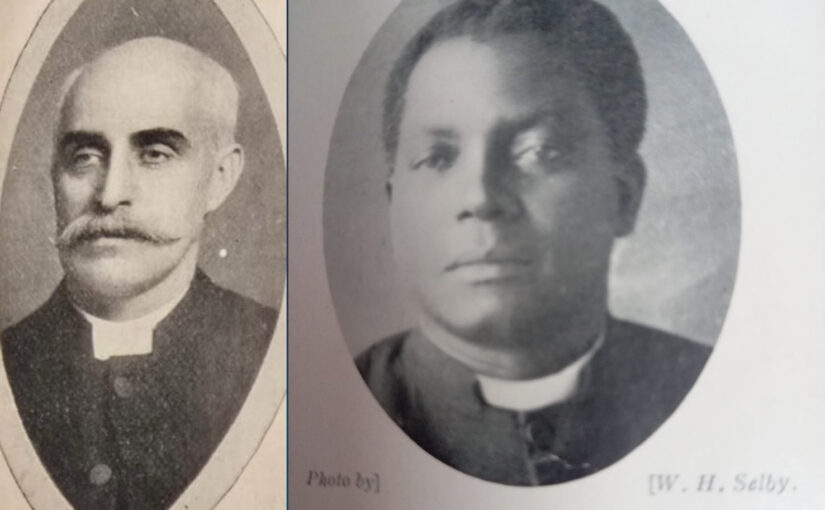
Mfantsipim has many unsung men who worked hard and gave their all to guide the school through dark patches in its growth. One of these men is the Rev. A.T. R. Bartrop. He arrived in the then Gold Coast on Oct 4th 1903, as the Superintendent of the Methodist Mission. At that time, the school was known as “the Collegiate School,” and it was housed in the Mission House. It was struggling with Mr. Albert Morgan, the Ghanaian headmaster, assisted by Mr. Graves, doing the most with the little they had.

Unlike his predecessor, Rev. Dennis Kemp, Rev. Bartrop believed in the inherent ability of the African and in the idea of a secondary school for students in the Gold Coast. He started work immediately to improve things. However, it was not long before another challenge crept up. The Fante Public School Ltd, led by John Mensah Sarbah, W.E. Sam among other Fante nationalists, also opened its own secondary school in Cape Coast in April 1905. Suddenly, the future of the Methodists’ Collegiate School looked more precarious than ever. Moreover, Bartrop feared that education outside the Church’s influence would be too secular. He reached out to Mensah Sarbah and suggested that the two schools be amalgamated. The latter agreed, and in July 1905, the two schools merged into one and took the name “Mfantsipim”.

Mfantsipim struggled in the first two years. One reason was that it lacked an European headmaster, an issue Rev. Bartrop worked hard to address. The other reason was financial. Even as the school struggled along, two of its biggest benefactors would die within 6 months of each other in 1906. So by the time Rev. Bartrop finally got the Methodist Missionary Organization to send Rev. Balmer as the headmaster in Nov 1907, there were only 8 students left with no teachers.

Bartrop, Balmer, and Mensah Sarbah would subsequently work really hard to rescue the school and set it on a growth trajectory. One move was to bring Mfantsipim under the administrative umbrella of the Methodist Church in February 1908. He also worked to help get Mfantsipim a permanent location.

After 25 years in the ministry with nearly 6 years of that in Ghana, Rev. Bartrop retired and returned to the UK on May 9th, 1909, to great fanfare. He was seen off by Mfantsipim students, members of the Methodist Church, chiefs, and a singing band.

Balmer had also been called by the Missionary Society to serve on an inspection mission to other West African countries.

However, back in the UK, Bartrop thought longingly of the people of the Gold Coast, the work he still had to do at Mfantsipim, and the task of solidifying other mission schools and spreading the church into the Asante areas, as well as the northern territories. He also pushed the Methodist Mission to send Rev. Balmer back to Mfantsipim. The Mission finally agreed, and Balmer returned to Cape Coast on October 3, 1909. Bartrop returned a week later.

For a while, it looked like the school would have the support of the triumvirate of Bartrop, Balmer, and Mensah Sarbah forever. However, it was not to be because on May 23, 1910, Rev. Bartrop died after contracting yellow fever from visiting an ill priest of the Church in Sekondi.

Mensah Sarbah died 6 months later on November 27, 1910. A dejected Rev. Balmer had nervous and physical breakdowns shortly after Mensah Sarbah’s death and retired to the UK in December 1910.

Thus, Mfantsipim really owes Rev. Bartrop a great deal. Like Balmer said after Bartrop’s death, “…if Mfantsipim can claim a martyr, it should be Rev. Bartrop.”
In his memory, the hymn “For All the Saints” was sung on the 2nd Founders Day on November 9th, 1910, and also adopted as the School Hymn. However, there is nothing on the school’s campus named after this very important founder. Nothing that brings his name to mind immediately….a fact that needs to be rectified.

There is, however, an Old Boy who, in his own way, honored Rev. Bartrop. His name is Rev. Ebenezer Amos Sackey. Born in Winneba in 1865, he entered the Wesleyan High School under Rev. Cannell in 1883. He became the school organist. He graduated in 1885 and became a tutor. He headed the Winneba Elementary School till 1890, and a school in Saltpond till 1893, when he entered the ministry. Starting with his post in Chama in 1894, he became known as the Head of Mission who renovated Methodist mission buildings and schools. He built the mission house in Chama and renovated those in Axim, Winneba, Elmina, and finally the Wesley Chapel in Cape Coast in 1918.

Now it was not only Mfantsipim that treasured Bartrop’s leadership; the Methodist Church in the Gold Coast also flourished under his guidance, and this was a fact all the priests cherished and respected….including Rev. Sackey. He struck up a friendship with Rev. Bartrop, his boss, that lasted till the latter’s death in May 1910.

Per the family’s account, when Bartrop died in 1910, Rev. Sackey re-named the Sackey family house in Winneba, the “Bartrop” House.  A year earlier in 1909, he gave his son, who was born that March and was called Alfred, the middle name “Bartrop”.

Alfred Bartrop Sackey would enter Mfantsipim in 1925 with classmates such as Busia, F.L. Bartels, and Armattoe. He went on to study at Wesley College and later received his first teaching appointment at Mfantsipim in 1932, teaching Latin and History.

Alfred had 4 boys who all attended Mfantsipim, and all carried the middle name “Bartrop”.

Mfantsipim may not have adequately honored Rev. A.T.R. Bartrop, but an Old Boy, Rev. E. A. Sackey, has honored him on his own in a way that has stood the test of time.

References:
– Bartels: History of Ghanaian Methodism, 1965
– ⁠Adu Boahen: Mfantsipim and the Making of Ghana, 1996
– ⁠The Gold Coast Nation, Nov 17, 1917
– Hutchinson: Pen-Pictures of Modern African Celebrities, 1929
– The Gold Coast Nation, Nov 10, 1917
– ⁠Accounts from the Bartrop-Sackey family


Kojo Mensa-Wilmot – a Molecular Biologist and Parasitologist

Mfantsipim rose out of a spirit of social responsibility, and that spirit has survived the test of time and is evident in the lives of many Old Boys who work to improve the lives of many through medical research, clinical medicine, public advocacy, education, and so on.

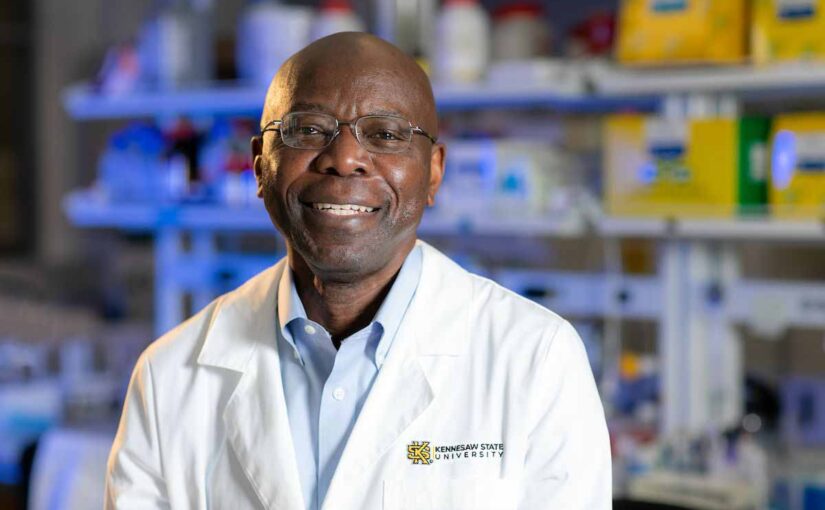
The Old Boy I present in this profile is such a person. He is Professor Kojo Mensa-Wilmot. Kojo is a molecular biologist and a renowned research scientist. His work centers on tropical parasitic diseases, with his primary area of interest being Human African Trypanosomiasis (HAT), better known as sleeping sickness. He was, until recently, Dean of the College of Science and Mathematics at Kennesaw State University in Georgia, USA, a position he has given up so as to concentrate fully on running his research lab.

Kojo entered Mfantsipim in 1969 and graduated in 1976; he is MOBA-74. He was in Balmer-Acquaah and became prefect of the upper dorm in 6th form. He credits that experience with teaching him a lot about working with others and leadership. It was also at Mfantsipim that a teacher, Richard Snell, fostered a lifelong interest in Chemistry. Kojo still remembers that time fondly and with gratitude.

After his A-levels, he was admitted to the University of Ghana, Legon, to study Biology. After taking organic chemistry classes, he soon found that subject more exciting than biology. He credits Professor Torto’s enthusiasm for teaching the subject as the reason he found organic chemistry so much more interesting. Also, some faculty in the Biochemistry department were studying parasite enzymes, and their work helped sow the seeds of his interest in parasitic diseases. Then, Dr. Peter Larway from the department introduced him to the discipline needed and the challenges one faced in designing biochemical studies and performing the necessary experiments.

One day at the British Council Library, he read about a researcher called Ernest Bueding who worked at Johns Hopkins University in Baltimore, USA. His area of research was the treatment of the parasitic disease schistosomiasis, a parasitic bloodworm found in Ghana and other countries in Africa, Asia, and South America. He resolved that day to apply to Johns Hopkins so he could work with Dr. Bueding.

So after graduating with a degree in Biochemistry from Legon, he headed to Johns Hopkins in Baltimore. Unfortunately, Dr. Bueding had retired, so Kojo switched his goals and pursued his master’s in Biochemistry at the Department of Biochemistry at the Johns Hopkins Bloomberg School of Public Health. Kojo so impressed the faculty that he was sponsored for his doctoral work. 

Settling on the nascent field of Molecular Biology as the area for his thesis, his advisor was Roger McMacken, an expert in DNA replication. By transferring the DNA of a virus into bacteria, McMacken got the bacteria to produce the proteins encoded by the virus. This enabled the study of these proteins, their interactions, and their functions. He finished his PhD under the mentorship of McMacken in 1988. Through the process, Kojo realized that he had found a way to study parasitic diseases: he could grow parasite DNA in bacteria, extract and purify the proteins produced. He could then study how these proteins worked and/or whether they were suitable targets for drugs to treat parasitic diseases.

And so, in 1989, he began a Rockefeller Foundation postdoctoral fellowship in the laboratory of Professor Paul Englund at the Johns Hopkins School of Medicine, where he studied the molecular biology of the African trypanosome.

In 1992, he was hired at the University of Georgia (UGA) in Athens, USA, as an assistant professor in molecular parasitology. He also won a highly competitive national award – the Burroughs Wellcome Fund New Investigator award. Valued at about $500,000, it allowed him to set up his research lab and continue his work on finding a treatment for sleeping sickness.

In his close to 30-year stay at the UGA, some of the significant achievements he had were:

– he found compounds that could be re-purposed as potential treatments for HAT, like Curaxin-137 (CBL0137);

– he discovered a previously unknown cellular pathway through which proteins migrate within the trypanosome under environmental stress; this pathway opens the door to possible treatments against a host of other parasites.

– his lab, employing and perfecting a technique called ‘Kinase Scaffold Repurposing”, repurposed a drug used to treat breast cancer called “Laptinib” to target kinase enzymes in the parasite;

– he published over 80 papers in scientific journals and has been cited over 1800 times;

– he rose to become professor and chair of the Department of Cellular Biology at UGA, and chair of the Division of Basic and Translational Biomedical Sciences within UGA’s Biomedical and Health Sciences Institute;

– he secured a $2.6 million NIH grant for his work in 2017;

– he mentored and actively encouraged the recruitment of minority graduate students;

– In 2017, he was elected as a lifelong fellow of the African Academy of Sciences in recognition of his global contributions to tropical medicine and molecular biology.

In August 2020, Kojo left UGA to become the Dean of the College of Science and Mathematics at Kennesaw State University (KSU). In addition to his administrative duties, he continued his research work at Kenessaw. He also secured additional NIH funding in 2021, totaling $3.3 million.

As noted above, the impact of his work is evident in the research dollars he has attracted. Also, at the inaugural Roger L. McMacken Jr. Lecture program at Johns Hopkins in 2023, he was one of two former alumni of Roger MacMacken’s lab who were invited to deliver remarks. Kojo was instrumental in establishing a scholarship at the Johns Hopkins Bloomberg School of Public Health in honor of his mentor. 

He has been a trailblazer, too. He is the first black PhD graduate in Molecular Biology from Johns Hopkins Bloomberg School of Public Health, the first black to chair a science department at UGA, and the first black dean of Science and Mathematics at KSU.

Kojo Mensa-Wilmot epitomizes the integration of all the lessons that time spent on Kwabotwe Hill imparts – discipline, hard work, service, thoughtfulness, and foresight. These qualities have guided him to the top levels of scientific research in the US, and, true to how he was nurtured at Mfantsipim, he is putting his knowledge and skills to work to help solve a problem that afflicts the people who live in the country he comes from. He also helps grow scientific knowledge and trains future scientists. In that, he shows a sense of purpose that the Founding Fathers would be proud of. In everything he has done so far, he has lived up to the motto, “Dwen Hwe Kan”.

Kojo Mensa-Wilmot is an illustrious son of Mfantsipim, a Botwe boy.

He Refused to Wear the Scarf

The day was June 28, 1963. On Kwabotwe Hill, that was the day the Ghana Young Pioneers Movement (GYP) was going to be officially inaugurated. Unlike other school clubs like the Drama Club, Christian Union, Chess Club, Debating Club, etc., the inauguration of this movement had to be special and official. Rev. W.G.M. Brandful, the headmaster himself, had to be present. He also had to wear a signature GYP scarf, and it was going to happen at morning assembly.

So who were these Young Pioneers?

The Ghana Young Pioneer Movement (GYP) was a youth movement founded by Kwame Nkrumah in 1960. Modeled after youth movements like the Boys Scouts of the UK, the Kosmosol of the then USSR, the Israeli Gadna, the Red Pioneers of China, and youth groups in Germany and the US, the group sought to raise Ghanaian youth to be patriotic, pan-Africanist, socialist, and anti-imperialist. They were immersed in military drills, classes on Ghanaian culture, and taught lessons on being an upstanding citizen – the 12-point code of discipline. Training also included vocational and technical skills.
They wore crisp khaki uniforms, boots, and an iconic neck scarf.

The kids were taught to chant many patriotic slogans. However, there were also slogans like, “Nkrumah will make you fishers of men, if you follow him”, “Nkrumah is our Messiah”, and “Nkrumah does no wrong”, that rubbed the Churches and some in the Christian community the wrong way. Moreover, there was also the fear that the movement was replacing Christian teaching with political indoctrination, and the subject was mainly Nkrumah.
Added to that were the accusations that the kids in the movement were being trained to spy on their parents and other adults, and you had a section of the population that was against the GYP.

Despite the opposition, the only person to speak up about the use of biblical themes was the Right Reverend Richard Roseveare, the Anglican Bishop of Accra. On Aug 4, 1962, at the Anglican Synod, he condemned the movement as “godless” and accused them of a “gross parody of Christian scripture”. About a week later, he got expelled from Ghana (though due to public outcry, Nkrumah allowed him back two months later).

Interestingly, the man who helped put the movement together, made sure the kids got religious discipline (the spiritual architect), was the primary administrator, and the Rector of the movement’s training center – the Kwame Nkrumah Youth Leadership Training Institute – was a Methodist priest and an Old Boy called Rev. Dr. James Stanley Adama Stephens. He saw these slogans as metaphors. To him, a “messiah” in the political context meant a “liberator” or “political savior” who had freed Ghana from British colonial rule—not a divine being.
Suffice to say there was some disagreement between his position and the Church’s.

So after the expulsion of Roseveare and with the Preventive Detention Act (PDA) of 1958 as a great deterrent, most in the church and civil society kept mum.

Until that Friday morning on June 28, 1963.

Almost everyone at morning assembly that morning probably assumed that Rev. Brandful was just going to wear the scarf, oversee the inauguration, and carry on with the day. But is that what happened?

Now let’s take a step back and examine the school Rev. Brandful headed, its age, and the traditions that made Mfantsipim what it was. In 1963, the school had been in existence for 87 years! The 12-point Code of Discipline of the Young Pioneers was like the air Mfantsipim boys breathed daily.

“Love of Country?” Since Mensah Sarbah and Casely Hayford, loving Ghana is like the birthright of the school. Old Boys started the fight for independence!

“Discipline, Obedience, Honesty, Morality, Punctuality?” Just ask any Botwe boy.
“Comradeship and Forbearance?” Some people think MOBA is a cult!

The things the movement was trying to teach had been Mfantsipim’s tradition for 87 years!

What about the pan-africanism and anti-imperialism? Look, Mensah Sarbah got the school named “Mfantsipim” and gave it a motto in Fante in 1905. Rev. Brandful knew that on that hill, we are more conscious of who we are than a 3-year-old movement could ever teach.

And Mfantsipim as a school had a curriculum that included technical and vocational training. There were no military drills but life on that hill was close to one.

And I am sure the dear headmaster remembered the 1948 riots and their effect on the school. Moreover, he was definitely no fan of the biblical metaphors and indoctrination, and believed that they had no place in a school where the minds of the young were being molded.

And so he walked out that morning and uttered the famous words:

“They want to put the scarf around my neck, and I refuse it”.

A month later, he was fired as headmaster of Mfantsipim School.

Three years later, Nkrumah was gone, and with him, the Young Pioneers, but on Kwabotwe Hill, boys were still being raised according to traditions that were old and enduring. No matter where you stand on the issue of Nkrumah, Rev. Brandful’s action spells bravery. He had the courage to stand by what he believed in, even though he knew it would cost him. He epitomized the lessons he taught as headmaster. When it came to it, he walked the walk. Sadly, it was not the last time the government would meddle in the school’s affairs.

May the brave soul of Rev. Brandful RIP.

The Headboy who Punished the Whole Student Body

The late Ghanaian theologian, Kwame Bediako, was an amazing person, and a total force of nature. When he left the shores of Ghana in 1969 to go do his doctorate in existential literature at the University of Bordeaux in France, he was an avowed atheist.

However, in August 1970, he had a “Saul-Paul moment” in the shower, converted to Christianity, and went on to become one of the most influential theologians the African continent has produced. Over the next decades, until his death in 2008, his work “sought to reposition Africa — its languages, cultures, and religious heritage — as a legitimate and rich source of Christian theological reflection, rather than merely a recipient of Western missionary Christianity”. It is said that what Luther and Calvin are for evangelical Christians globally, Kwame Bediako is for many African evangelicals. He also founded and led the Akrofi-Christaller Institute.

Years before all that, he was an Mfantsipim boy. The Old Boys who shared his story describe him as a brilliant student, with a rebellious streak, absolutely fearless, and the consummate leader. It is said that the staff admired him greatly. Due to the much darker hue of his complexion, his nickname was “Joe Noir”.

In 1963-64 or so, he became the headboy. At that time, Mfantsipim had a renowned Math teacher, Mr. Snell. He was the author of the Maths book the school used. He was also elderly then.

One Sunday, Mr. Snell did the preaching during evening service, and during his sermon, the boys made some “unwelcome noise”, as Botwe boys are wont to do during evening service sometimes.

Kwame Bediako found that disrespectful to the venerable teacher and decided to punish the entire student body.

It has been a custom at Mfantsipim for as long as anyone can remember that the boys are allowed to go into Cape Coast town after morning inspection on Saturdays. The next Saturday after the evening service incident, Kwame assembled the whole student body at the academic site and kept them there all morning. No one got to go to town. And that was the punishment he meted out for their disrespecting Mr. Snell. And no one dared to disobey him! Not even the other prefects!

The lessons inherent in that story are many, and they all feed into the excellence that is preached and practiced on the hill. It is a story that teaches respect for authority and the elderly, as well as discipline, leadership, bravery, and conviction.

Alex Apau Dadey, the Philanthropist and Entrepreneur

In the long and rich history of Mfantsipim are stories of successful entrepreneurs who not only helped found the school but also came to its financial rescue several times in the early decades. Men like Jacob Wilson Sey, John Mensah Sarbah, J.W. DeGraft-Johnsom, and W.E. Sam, among others, placed as much emphasis on philanthropy as they did on the creation of wealth. They gave of themselves and their wealth to improve the nation as a whole and the communities they lived in, locally. They believed in giving back.

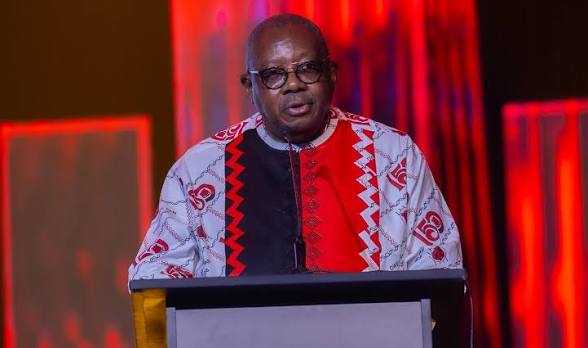
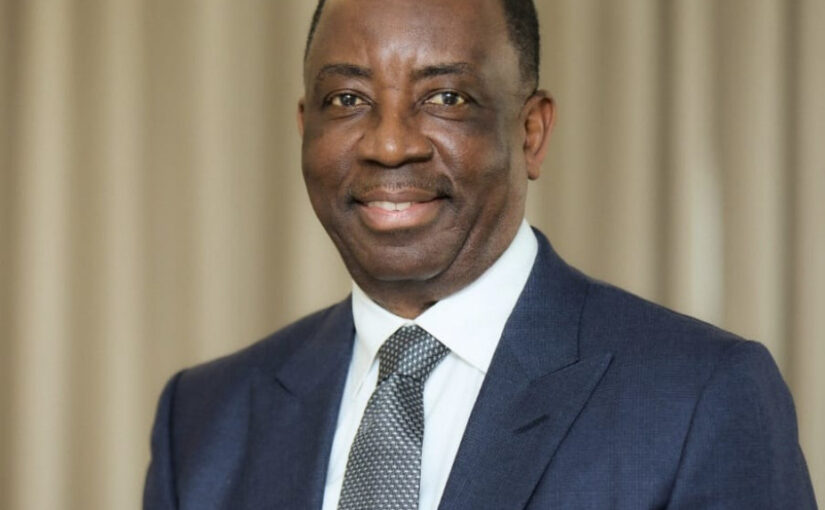
From this long line of entrepreneurs and philanthropists comes Alex Apau Dadey, a distinguished Ghanaian entrepreneur, corporate strategist, and business statesman, and the Executive Chairman of KGL Group, an entity he founded. He is widely recognized as one of the leading voices in the rise of modern indigenous African enterprise.

Alex was in Mfantsipim from 1974 to 1979. He was in Bartels-Sneath. Besides academics, he was a star athlete while on the Hill. In Form One, he won the Giant race. He would go on to represent the school in 100m, 200m, and 400m races.
After 6th form, Alex entered the University of Ghana, Legon. He graduated from their School of Administration (now UG Business School) in 1986, and left for the UK that same year.

Over the first 15 years in the UK, Alex worked for Gordon Richman Textiles Limited. He steadily moved up the ranks from Export Sales Supervisor to Export Sales Director and oversaw important accounts in 10 countries across Europe, the Middle East, and Africa.
Even in those years, Alex kept an eye on the business scene in Ghana. From the example of a mother who traded to supplement household income, and from Ghanaian entrepreneurs of the 1970s like Joshua Kwabena Siaw of Tata Brewery and R.A. Darko of Mechanical Lloyd, he had always dreamt of becoming an entrepreneur and saw himself returning home one day to start a business.
In 2001, he acquired the backing from DCD Finance Group PLC to start Qualitexx Limited. For the next 17 years, he actively financed ventures in Ghana and other African countries as well as in the UK. He also encouraged Ghanaian diasporians to invest in the country.

Ever conscious of the dream of returning home to Ghana to start a business venture, he did just that in 2018. On his return, due to the role he had played in getting diasporans to invest in the country, he was named a member of the Governing Board of the Ghana Investment Promotion Center (GIPC). He was named Chairman of the Board in 2021, a position he held until the end of 2024.
Even as he worked with GIPC to get investments into the country, he founded the KGL Group.

The first and most conspicuous subsidiary he founded was KGL Technology Limited. In its first major deal, the company digitized Ghana’s lottery operations, run by the National Lottery Authority (NLA), by introducing USSD and online platforms that transformed a traditionally manual system and money-losing venture into a modern, technology-driven, and profitable enterprise. The platform he created for NLA is working so well that KGL Tech is being asked to replicate it in Côte d’Ivoire and Nigeria.
Another subsidiary Alex founded was Fuel Automation Ghana Limited. This company received the mandate from the Ministry of Fisheries and Aquaculture Development, Ghana, to design, build, and automate 300 landing beach premix fuel outlets in Ghana — providing purpose-made fuel for fishermen who use outboard motors, and tackling issues of diversion, corruption, adulteration, and hoarding that had afflicted the sector for years. He did this very successfully.

In eight years, Alex has built KGL Group into a wholly owned Ghanaian enterprise comprising eight subsidiaries with interests in technology innovation, FinTech, logistics, trade, property development, gaming, and commerce. (The name “KGL” comes from “Keed Ghana Ltd” – one of the subsidiaries that is into mobile and telecom financial services).

As great an entrepreneur as Alex is, he also ardently believes in giving back. To achieve that, one of his subsidiaries, the KGL Foundation, is tasked with philanthropy.
In partnership with the Eve Medical Foundation, the foundation is building a psychiatric hospital at the Kwame Nkrumah University of Science and Technology (KNUST) in Kumasi. The foundation makes recurring donations of incubators to hospitals across the country, and has a scholarship program for orphans and underprivileged children.
The KGL Group signed a landmark two-year sponsorship deal worth GH¢20 million with the Ghana Football Association (GFA) to support the Black Stars, and the foundation has a five-year sponsorship agreement with the GFA to develop grassroots football, including providing equipment like footballs and organizing events such as the KGL U-17 Champions League.

And Alex has not forgotten his roots.
He is funding a multi-million sports complex that is under construction at Mfantsipim.
In a visit by a MOBA delegation to KGL House in 2025, Alex donated a GH¢100,000 cash prize to support Mfantsipim’s sports initiatives and introduced the “Alex Dadey Sportsman of the Year Award” — an annual GH¢10,000 prize to be awarded to the most deserving sportsman each year at Mfantsipim’s Speech and Prize Giving Day.
He also announced a mentorship scheme in partnership with KGL Group, designed to equip young MOBA professionals with industry-ready skills for the Ghanaian job market.

Alex strongly believes in public-private partnerships and that they are not only for developing Ghana and the whole of the African continent, but also for creating a path towards a unified African market.
He initiated the Ghana Diaspora Homecoming Summit in 2017 and the Ghana Investment and Opportunities Summit UK in 2018, both of which are now held biennially.
He serves on several corporate boards, including Ecom Agro Industrial, Premier Textiles Group in the United Kingdom, Birchfield Investments Limited in Jersey, Channel Islands, and Dubai, KGL Capital (UK) Limited, and Dominion Direct (UK) Limited. He is also a sought-after speaker, having spoken at the University of Ghana, the London School of Economics, and Oxford University.

Is it any surprise that Alex Dadey is one very awarded individual?

In 2017, he was awarded the “Excellence in Organizational Leadership” and the “Diaspora African Forum Excellence Award” by the Ghana Diaspora Homecoming Summit Committee for the successful execution of the Ghana Diaspora Homecoming and for his prominent role in ensuring the summit’s success, respectively.
He was named “Man of the Year” at the 8th EMY Africa Awards in 2023, and as of May 2025, had won “CEO of the Year” three consecutive times.
In 2025, he won the prestigious “Forbes Best of Africa Corporate Leadership and Innovation Award” at a Leadership and Philanthropy Forum held at the House of Lords in London.

For Alex Dadey, business is not only about the profit but about creating a legacy. It is about building a Ghanaian institution that lasts generations. He sees business as integral to community and nation-building. He has the unwavering faith that Africa can build homegrown institutions.
In all he does, Alex epitomizes the powerful lessons that feed the age-old traditions of Mfantsipim. Lessons of excellence, vision, foresight, patience, integrity, hard work, and social consciousness have helped to fuel his success.

Alex Apau Dadey is an illustrious son of Mfantsipim, a Botwe boy.

So What Happened to James Picot, Our First Headmaster?

Dear MOBA Fraternity, have you ever wondered what happened to the young James Picot after he left the school and the then Gold Coast in 1878?

Well, he did not vanish into thin air.

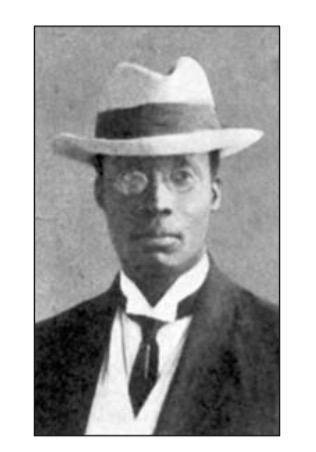
James Picot was born on December 23, 1858, in Alderney, Guernsey, part of the Channel Islands. The Picots were a strong Methodist family. His brother, Rev. Thomas Picot, was Head of the Wesleyan Synod in the Gold Coast and really made the school’s opening happen.

So, as of April 3, 1876, when he started as the first headmaster of the Wesleyan High School, he was still 17. After two years as headmaster, he wanted to return to the UK to complete his education. Remember, he may have been a pupil teacher at Claremont College when his brother dragged him to Cape Coast. Per Bartels, he only had the College of Preceptors certificate, which was equivalent to the “O”-Level certificate. (There may be some research that points to the fact that he was training to be a teacher and so he may have had a much higher level of education than previously thought).

When he returned to the UK, he became a lay preacher. He was subsequently accepted into Richmond College, a seminary, in 1881.

Since he was fluent in both English and French, his first station out of school was in Rouen, France. After 3 years there, he joined his brother, Rev. Thomas Picot, in Haiti, who had moved there to head the mission. He spent three years there, too.

Back home, he would serve the Church for the next 43 years, working in missions in the Channel Islands and the western part of the UK.

James Picot was married three times and had a total of nine children.

His first wife was Ann Le Brocq, and they married around 1890. They had four children before she passed away in 1900. He then married Laure Ahier in 1903. They had three children. She died two days after delivering their third child in 1906. With seven children on his hands, he remarried for the third time later that year. Her name was Edith Gliddon. They had two children together.

His last wife, Edith, outlived him, then James Picot passed on August 12, 1930 in Letchworth, Hertfordshire in England. She passed eight years later.

In his obituary, Rev. James Picot was described as “ a wide reader and original thinker”. His sermons were described as being “…clear and thoughtful expositions of the truth of Christian life and experience.” His last words were reportedly, “I am happy in the love of my Father.”

One of the children of James and Laure, was born in 1904 and named Caroline. In 1989, when the Mfantsipim Foundation UK & Ireland officially launched, Ms Caroline Picot was a guest.

The last of their three children was also named James. Unfortunately, Laura died 2 days after delivering him. James Picot Jr. would, as a young man, migrate to Australia, where he became a famous poet. He joined the Australian Imperial Force during WWII and was posted to Singapore, where he was captured by the Japanese. Forced to work on the Burma-Thailand Railway, he died of beriberi on 11 April 1944.

It is truly impressive that James Picot spent his life serving others, and the school he helped start at the age of 17 still stands today. I wonder what he would say if he were to see the school now. May he truly rest in peace.

PS: Thanks to Daniel Adu-Gyamfi for his research on the Picot Family.

References:

1. Wikitree-dot-com

2. Genealogy-dot -com

3. Minutes of the 188th Conference of the Wesleyan Methodist Church, in Birmingham, July 1931

4. F.L. Bartel’s “The Roots of Ghana Methodism”, 1965

Why did John Mensah Sarbah name the school “Mfantsipim”?

At first glance, it breaks down into “Mfantsi”, an allusion to the Fantes, and “-pim”, meaning “thousand”. Thus, most argue that the school’s name means “Thousands of Fantes”.

However, it is more than that.

The Fante nationalists, who founded the Fanti Public School Ltd and the Mfantsipim of 1905, were all members of the “Mfantse Amanbuhu Fekuw”, a Fante Nationalist Society. This is the same group from which the Aborigines Rights Protection Society emerged. This was a time of great nationalist fervor – the group had gotten the Lands Bill of 1897 quashed. Education became their next priority.

Moreover, there was a massive push to abandon the European habits most had learned from the colonialists and to return to Fante ways and traditions. This was known as the “Gone Fante” movement.

So, these nationalists wanted to revive Fante beliefs and foster growth through education. They needed a center where change could grow and a name that expressed these beliefs.

As Bartels notes in his memoirs titled “The Persistence of Paradox,” the new name aimed to express the Fante people’s spirit.

Bartels cites two Fante proverbs that help to explain the thought process behind the creation of the name. The first is “Ɔman si hɔ a na posuban si mu”. That means “it is only a viable nation that has its own fetish grove”. The second is, “Ɔman Biara hia posuban” to wit, “every nation needs a fetish grove where the spirit or soul of the nation resides”.

The name ‘Mfantsipim’ was chosen to represent this dream. While ‘Mfantsipim’ literally translates to ‘a thousand Fantes’, in context it means ‘many’ or ‘masses.’ The name was meant to symbolize a ‘posuban’—a sacred place—where these masses would gather, enabling the spirit of the Fante people to flourish. Not through spookism but through discipline, sacrifice, service and above all, education.

Thus, the foundation of Mfantsipim was seen not simply as a school for the Fantes but as the starting point of a wider cultural renaissance for the Gold Coast.

And so, when Rev. Bartrop asked Mensah Sarbah to merge Mfantsipim with the Collegiate School in 1905 and thus continue the traditions set forth by the founders in 1876, even though the latter agreed to the merger, it was done on his terms. The amalgamated institutions were to carry the name “Mfantsipim”, adopt the motto “Dwen Hwɛ Kan”, and retain the crest designed by Johnson B. Essuman Gwira.

The school may have had its origins in the Wesleyan tradition and a Wesleyan Mission House, but in becoming “Mfantsipim,” it became a sacred place where the spirit of the people of the Gold Coast would reside. A spirit of thoughtfulness, foresight, leadership, education, sacrifice, and service.

Rev. Albert Ocran – A Life Devoted to Serving People

Mfantsipim School has its foundation in the Methodist Church, and for decades, every single headmaster was an ordained priest. The leadership and guidance of the clergy have played a significant role in the education of thousands of boys who attended the school. And so it also makes sense that the school would produce impactful men of the cloth, like the late great Rev Gaddiel Acquaah. And from that line of impressive clergy men comes Rev. Albert Ocran.

Albert entered Mfantsipim in 1979 and was in Sarbah-Picot. He graduated in 1986 and entered the University of Ghana at Legon. He graduated with a degree in Economics with Sociology in 1990. He later obtained an MBA from the Ghana Institute of Management and Public Administration (GIMPA) in 2002.

Shortly after graduating from Legon, Albert, together with his wife Comfort, founded a printing and publishing business called Combert Impressions. After a decade of running this business, their shared passion for human capital development began to redefine their interests.

The couple initiated a personal development Road Show to mentor young people in January 2007. This had them traveling across the country with a contingent of accomplished Ghanaians speaking to young people and encouraging them to reach for their dreams and aspirations. The sessions included free workshops where participants were trained in skills like CV writing, business planning, talent development, public speaking and preparing for interviews. This roadshow is still held annually. Within four years, the Road Show had gone nationwide and been extended to Gambia and Nigeria. In 2011, the couple set up the Springboard Road Show Foundation to enable more young people to freely benefit from their diverse initiatives.

For the past 18 years, Albert has hosted “Springboard, Your Virtual University” on Joy FM, Joy News and other digital platforms. This educational and empowering show educates its audience and helps them improve their leadership and professional skills.

In 2013, Albert responded to the call to be ordained as a Reverend Minister. He first served as Executive pastor at the ICGC Christ Temple for ten years. In March 2023, he became Senior Pastor at the ICGC The New Wine Temple at East Legon, Accra, a position from which he has an even greater opportunity to win souls and shape the human development of the nation’s youth.

By combing his pastoral duties with his love for human capital development, he is not only developing souls for the afterlife but helping them to live better lives in this one, too. He has continued writing, publishing about 26 books with his wife, Comfort.

With books like “Snakes and Ladders: Entrapments and enablers on the complex journey of life, 2019”, “Sheba – Ancient Customer Service Secrets Repackaged In A Social-Media Driven Era (Biblical Economics Series Book 5), 2013”, and “The Lord, Madiba & The Eagle“ by Albert & Comfort Ocran, 2010”, Albert showed his penchant to find wisdom not only in the Bible but in the lives of courageous and accomplished leaders. And this penchant reflects in his sermons, speeches, and workshops.

During the COVID pandemic, Albert and Comfort managed the CoRe Program in partnership with the Mastercard Foundation and Solidaridad. The program used an integrated e-learning, e-mentoring and e-counselling approach to equip over 23 million young Ghanaians with resilience to cope with the effects of the COVID-19 pandemic. Springboard’s most recent intervention is the Ghana Grows Program, a partnership with the Mastercard Foundation that has helped over half a million young people to explore opportunities in the Agricultural and related Vocational Sectors.

Albert is a Fellow of the respected Aspen Global Leaders Network based in Colorado, USA, and the Africa Leadership Initiative West Africa (ALIWA). He was voted as Ghana’s 7th Most Respected CEO for 2009 and also received the Millennium Excellence Award for Motivation in 2010. For four consecutive years, he has appeared on ETV Ghana’s list of the 100 most influential Ghanaians. He also won the Exclusive Man of the Year Africa Award for 2018 in the Mentorship Category, among other awards.

On any day, Albert will be found serving people through mentoring, counselling or speaking sessions. After three decades, he doesn’t seem to have lost steam on this mission. If anything, he always seems to find a way of reinventing it. The thousands of testimonies from lives touched and volumes of impact stories published are a testament to the spirit of sacrifice, humility and service to humanity.

In all he does, that spirit of excellence, duty, and service that is taught on the Kwabotwe Hill is evident. Albert more than embodies the thoughtfulness and foresight preached by Mensah Sarbah.

Rev. Albert Ocran is an illustrious son of Mfantsipim, a Botwe boy.